
Alexander Fiske-Harrison running in his red-and-white striped Eton College athletics ‘colours’ blazer, which is in the same as the traditional colours of the Fiestas of San Fermín. (His hand is momentarily and illegally touching the bull as he balances himself before slipping into the middle of the herd between this bull and the bull behind him in the photo below.)
 Para leer esta publicación, ‘Colgando La Chaqueta: Adiós a las armas’, en español, por favor haga clic aquí
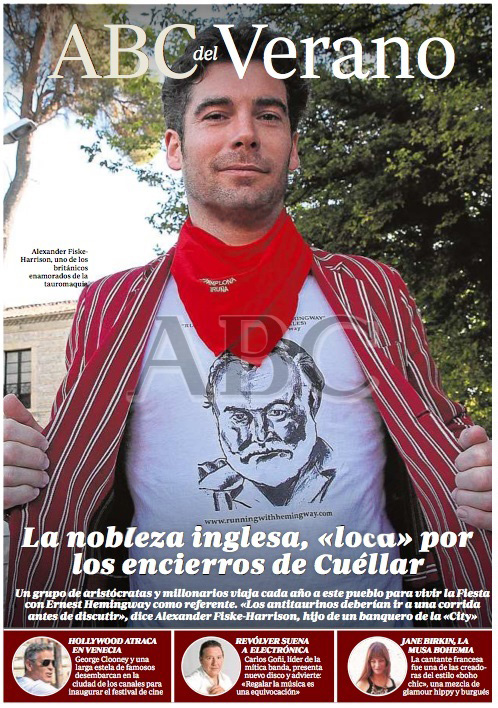
On Sunday in my beach café in Sotogrande in Andalusia I opened the Spanish newspapers to see myself and my bull-running jacket – originally my old secondary school athletics ‘colours’ blazer awarded for running the 400m when I was 17 and which just so happened to be in the traditional red and white of the world famous Fiestas of San Fermín in Pamplona – being discussed in the national newspaper La Razón under the headline, “Why are there young men who run the bull-runs of Miura wearing jackets in San Fermín?” 
Why are there young men who run the bull-runs of Miura in San Fermín?
This 14th of July, the Seville-based ranch marks 42 years at the Pamplona festival
After eight days of bull runs, the legendary and totemic Miura bulls, as feared as they are revered, bring a climax, with the permission of the “pobre de mí“, to the San Fermín festival. The six bulls from the Sevillian ranch (raised on the Zahariche estate in Lora del Río) return for another year, now for the 42nd time, to test the runners who dare to position themselves in front of the herd.This 14th of July 2024, the Miuras mark their 42nd bull-run, a breed that never disappoints with its challenging behaviour. They are especially dangerous in the final barriers and at the entrance to the bullring, due to their skill in orientation.Moreover, this is the ranch that has caused the most injuries of all types in the history of San Fermín: 225 in total. In the last bull run of 2023, fortunately, there were no injuries from bull horns, but there were six cases of trauma. The duration of the run was two minutes and 14 seconds.”Running the Bulls in a Jacket
For those who follow the bull-runs on TV, there is one image that particularly stands out: a significant number of young men dressed in jackets, instead of the classic white shirt and red scarf. We wonder why this is:As journalist Chapu Apaolaza recounts in his book ‘7th of July’, it was a trend started by the American spy Keith Baumchen, known as ‘El Bomber’: “Bomber and his friends decided one day to run the bull run in jackets, as one would attend Sunday mass in the USA, as a sign of respect.“This custom is still maintained today in the Miura bull runs. Bomber’s jacket was ivory-coloured. All kinds of blazer models parade down Estafeta Street, including the red with white stripes from Eton College worn by Alexander Fiske-Harrison,” Apaolaza reports.

Alexander Fiske-Harrison, bottom left in jacket, arm raised, running the bull-run down the side of a mountain in Falces in Navarra

Alexander Fiske-Harrison, right, in his jacket in the town of Cuéllar, in Old Castile, the most ancient bull-run in Spain referenced by the Pope in 1215A.D.
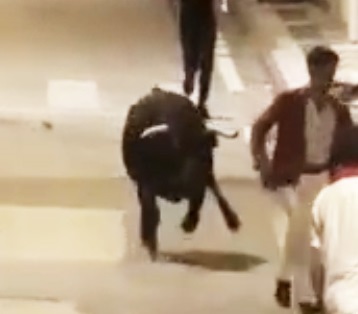
Alexander Fiske-Harrison, in jacket, leads the lone midnight bull down the street in the village of Funes
Since I first ran with the bulls – the bulls of Miura in fact, in Pamplona – fifteen years ago almost to the day, I have run over a hundred times, in a dozen different cities, towns and villages in Spain.
Ten years ago I moved to Pamplona for a season to research a book, The Bulls Of Pamplona, and it contained contributions from everyone from the mayor of the city to Ernest Hemingway’s grandson John and Orson Welles’s daughter Beatrice.

Alexander Fiske-Harrison with his record-breaking class of bullfighting students in July 2023 (Photo: Connor Quinn)
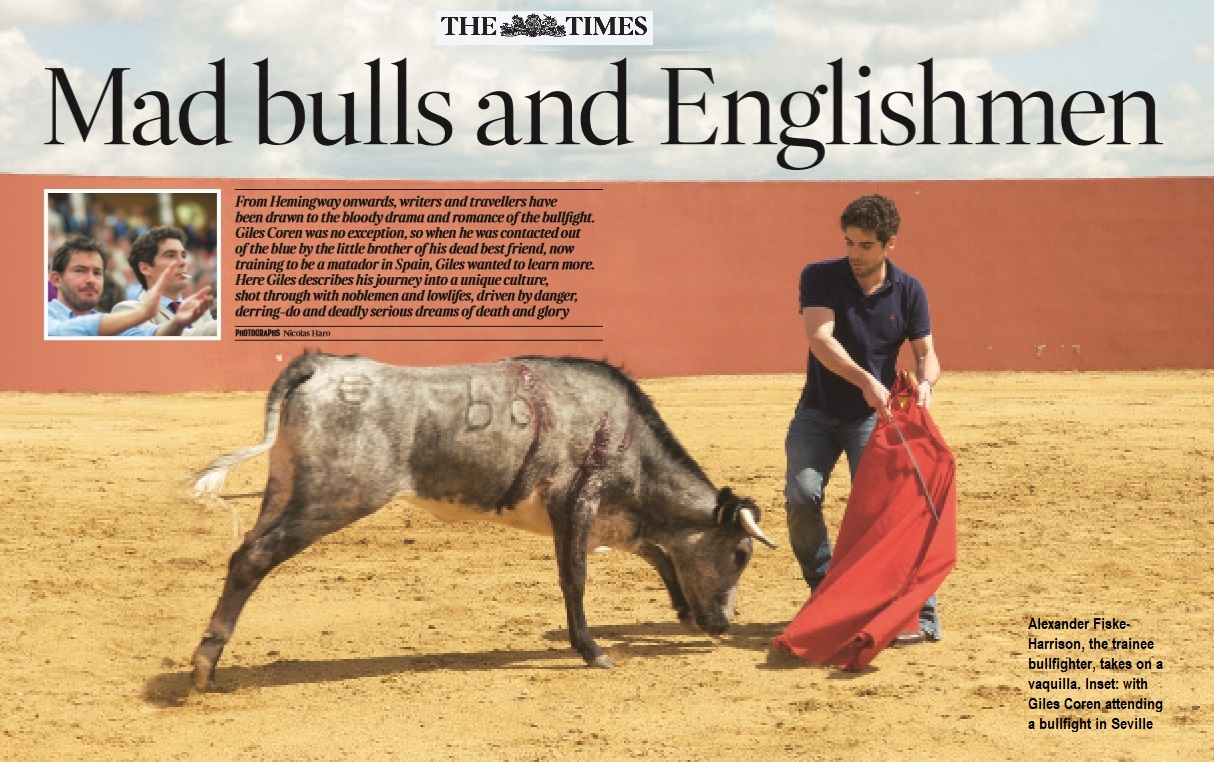
Even before that I ‘fought’ – meaning faced with the two-handed cape and the one-handed red cloth – bulls, including those of Miura, at their home. However, I have only ever killed one with a sword, a three-year-old, one third of a ton bull of Saltillo with the Miuras in the ring.
I trained with, and currently work alongside, the matador Eduardo Dávila Miura, nephew of the brothers Eduardo and Antonio Miura who run their fighting bull-breeding ranch in Zahariche as their forefathers have for over 175 years going back to their great, great grandfather Juan Miura Rodríguez.
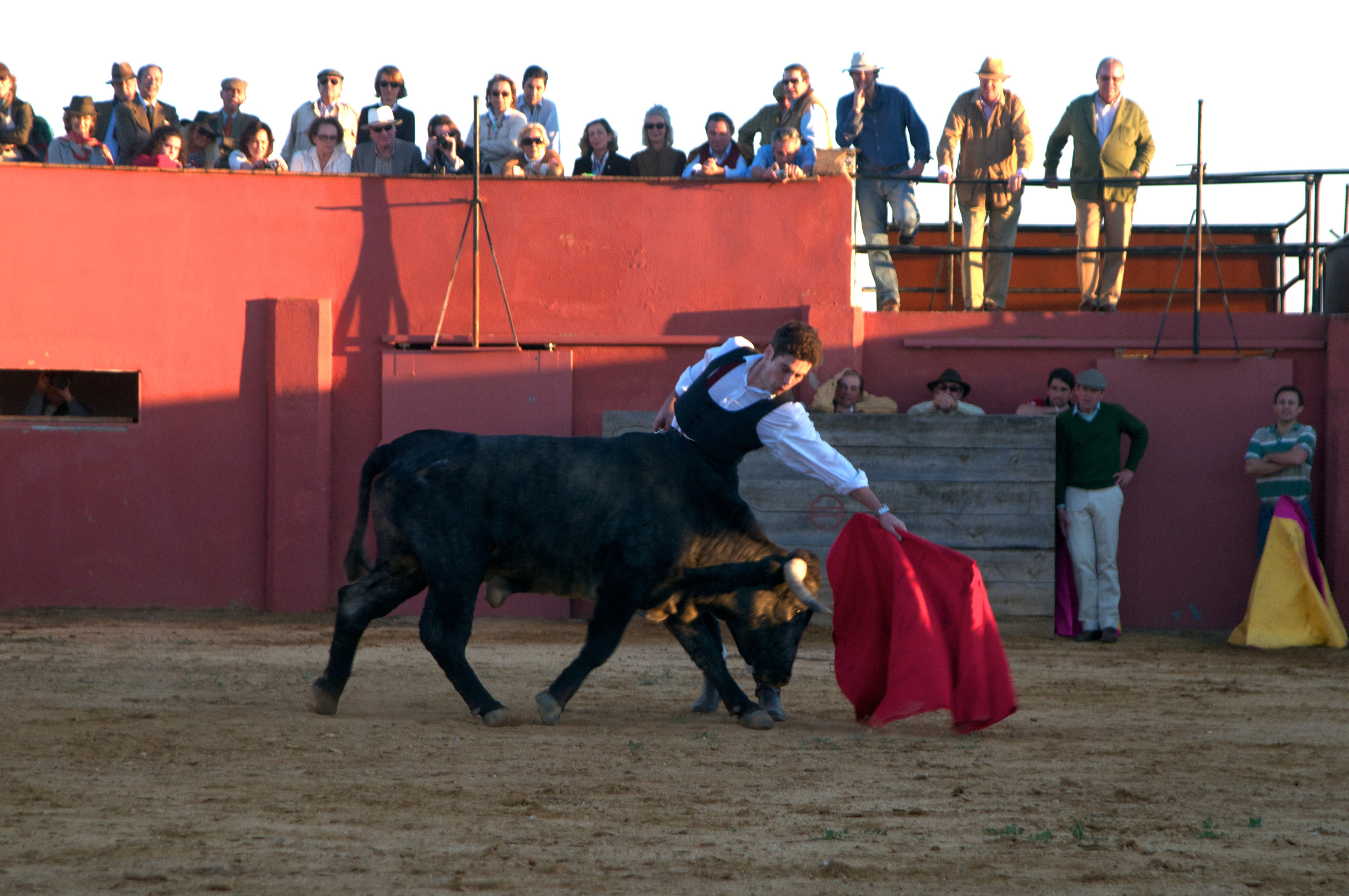
Alexander Fiske-Harrison fighting a bull of Saltillo. In the background behind the wooden hide is Antonio Miura alongside the breeder of that particular bull, Félix Moreno de la Cova, while on the sand are matador Eduardo Dávila Miura and the matador of Miuras Rafael Rubío, ‘Rafaelillo’. In the main audience are Antonio’s brother Eduardo Miura, Félix´s brother Enrique Moreno de la Cova, and everyone from Alexander parents to Her Royal Highness The Duchess of Segorbe, Princess of Orleans-Braganza, first cousin of the King of Spain.
Last year, Eduardo Dávila Miura and I trained 70 Americans in rudimentary cape-work outside Pamplona and put them in front of a dozen young bulls in a private ring in the blazing sun, which was not only a personal record for me both in terms of hours spent in the ring and animals fought, but the largest number of amateur bullfighters ever put through such a class.
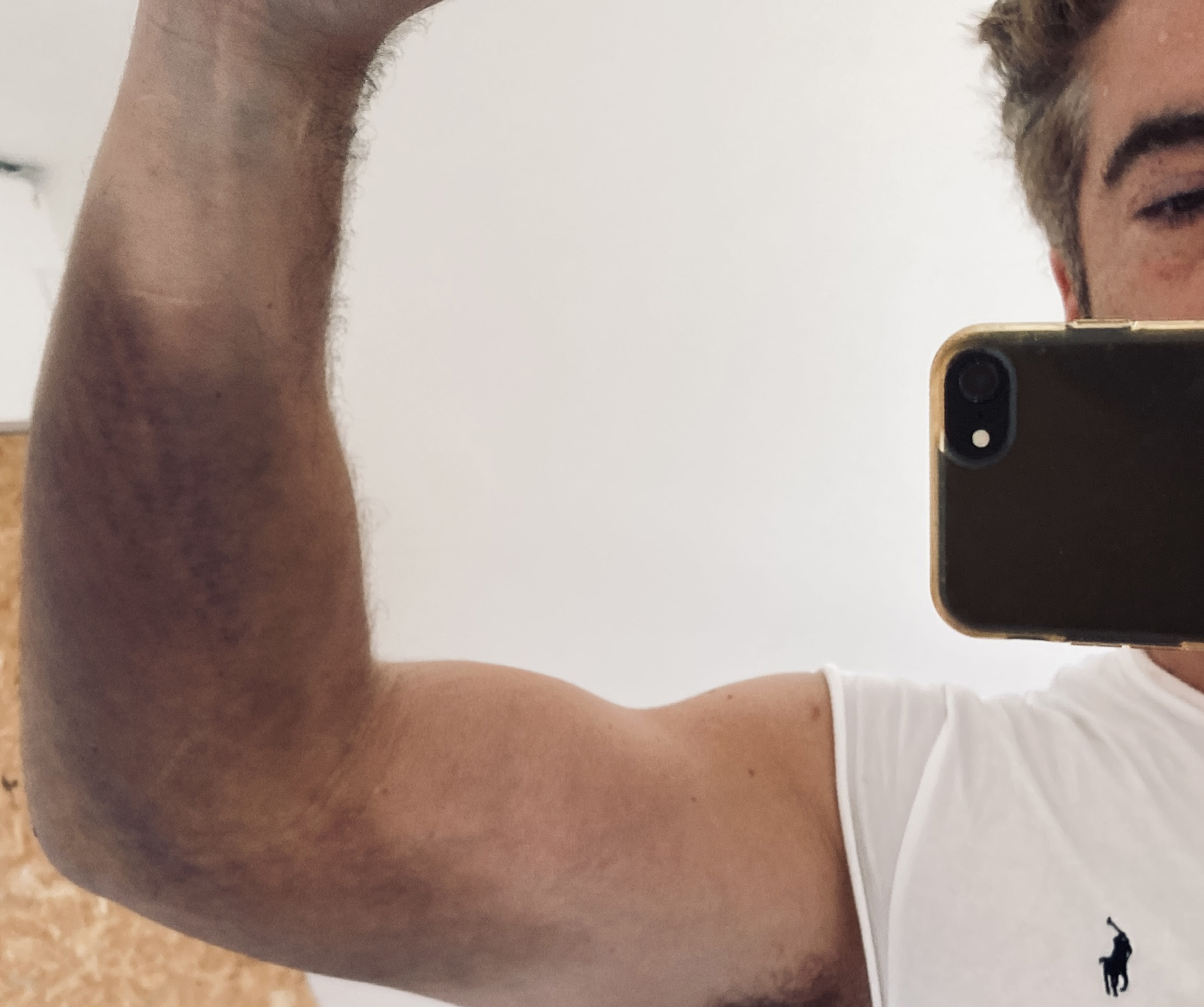
Alexander Fiske-Harrison with a fractured elbow from running with the bulls in Pamplona in 2023
This being despite the fact that my left arm was fractured after four men and a bull landed on me running in Pamplona two days previously. I did not notice at the time as it was not a displaced fracture, although my arm did turn black.
It was following this that the great fine art photographer, whose work with animals has garnered him such international recognition, David Yarrow, contacted me about photographing a fighting bull to add to his ever expanding collection of iconic images of noble beasts.
Of course, I took him to Miura, where they gave us the unheard of honour of bringing the 8-year-old, two thirds of a ton giant ‘Pañolito’ – fighting bulls in the ring are by Spanish law between 4 and 6 years old – into their private ring this February past.

LONDON, ENGLAND – SEPTEMBER 14: David Yarrow attends the private view of leading wildlife photographer, David Yarrow’s exhibition at Maddox Gallery Westbourne Grove, in association with CIROC, Rolls Royce and VICTOR on September 14, 2017 in London, England. (Photo by David M. Benett/Dave Benett/Getty Images for Maddox Gallery)
This bull is a semental, a Sire of Toros Bravos, and never has been, and never will be, fought. Which meant that how it would behave in the ring was a complete unknown. It did not disappoint, charging at anyone and anything for over an hour, and leading me to break my ankle to line it up for the perfect photo. It then returned to its breeding herd without a hair on its hide having been even touched. (You can read the whole story online here.)
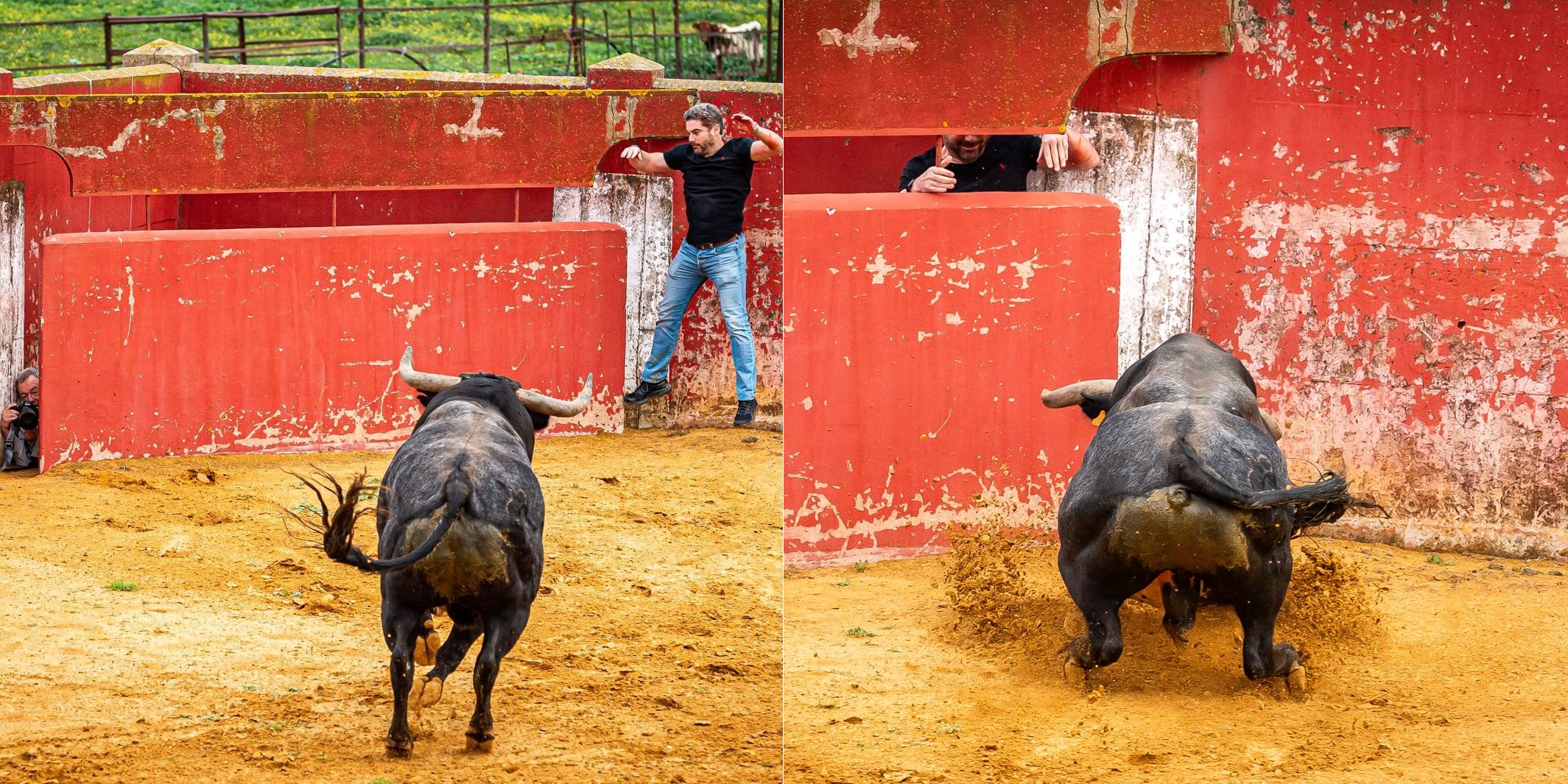
David Yarrow, far left, with his camera as Alexander Fiske-Harrison almost fails to make it from the ring to the safety of the hide, fracturing his ankle in the process (Photos by Richard Dunwoody, three time British Champion Jockey, two time Grand National winner)

BULLISH by David Yarrow

Eduardo Dávila Miura, Klarina Pichler, Alexander Fiske-Harrison, Eduardo Miura’s son Eduardo, David Yarrow’s assistant Tom, David and Antonio Miura at Zaharicha in Lora del Río, Seville, Spain (Photo: Richard Dunwoody)
To say that, as someone from the Anglophone – the ‘English-speaking’ – world I have integrated into el mundillo de los toros, ‘the little world of the bulls’, is to understate the case. In the words of Chat GPT 4: “El aficionado anglosajón vivo con más categoría en el mundo de los toros en España es Alexander Fiske-Harrison.” ‘The most distinguished living aficionado from an English-speaking country in the world of bullfighting in Spain is Alexander Fiske-Harrison’ (see Chat GPT online here.)
 And yet, despite having a train ticket from my home in Andalusia up to the capital of Navarre, and a place to stay with my great friends – and heroic bull-runners – the Barbarians shirt-wearing Welsh legends that are Bryan and Tony Hoskins, I was not there.
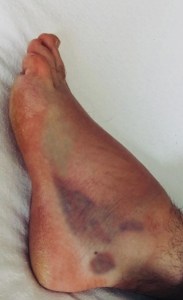 At first I thought my reasoning was my physical condition as a runner – my ankle has still not fully healed having been badly damaged by the father of the very Miura bulls I intended to run in Pamplona.
However, even a short sprint by a practised veteran runner who knows which stretch to pick and since 2017 has taken clients running ranging from the board of directors of NASCAR to billionaire Hollywood film producers – some of whom come with their own Special Forces bodyguards – is not asking the impossible.
Then the dog belonging to my girlfriend and myself fell terminally ill, and spending time and money to go on a vacation to run with bulls and drink and dine with old friends seemed wrong.
However, I still might have gone for the night if only it had been to drink and dine with old friends, but the thing about San Fermín is that would not be the case.

Alexander Fiske-Harrison & Kela (Photo: Klarina Pichler)
Since the time Ernest Hemingway first arrived in Pamplona 101 years ago the fiesta has been used by the Anglo-Saxons – as the Spanish refer to anyone English-speaking – as a hedonistic haven to indulge their excesses away from the prying eyes of their moral peers at home.
It’s not for no reason Ernest’s grandson John Hemingway titled his novel Bacchanalia: A Pamplona Story (one of the three protagonists is loosely modelled on me and hence has my father’s first name, Clive.)
You can see it in the behaviour of the characters in The Sun Also Rises just as clearly – they are with one possible exception moral bankrupts. And since that possible exception is telling the story himself, one suspects that in reality he is actually no exception at all.
As one Professor of American literature described them in the journal of The Hemingway Society, they are, by turns, compulsive, manipulative, moody, impulsive, hostile, distrustful, superficial, possessed of an intense need for personal power, uncertain regarding sexual identity, terrified, self-pitying, masochistic, catastrophic, emotionally starved, imbued with low self-esteem, obsessive, aggressive, self-centred, evasive, denial-prone, fearful, lonely, intolerant, self-destructive, and emotionally and physically impotent.
(From ‘Alcoholism in Ernest Hemingway’s The Sun Also Rises: a wine and roses perspective on the lost generation’ by Matts G. Djos in The Hemingway Review, March 22nd, 1995)
Personally, I have head it said – and witnessed – that the morning bull-run reduces the incidents of violence among the drunken revellers on a statistical level compared to sporting events, in a similar way to the fact that rugby matches in the UK are witness to infinitely less conflict among the audience than football (‘soccer’) matches are since the bloody struggle is never sublimated.
This may be true.
However, this combination of moral abandonment alongside a daily test of masculinity attracts people with far too much to prove, with far too great a gaping void in soul and too great an absence of intellectually developed impulse control for the bulls of Spain to ever heal.
The damaged young men from the corners of what was once the British Empire seem to expend their unmitigated male instincts in the encierro, the ‘bull-run’, in contests of recklessness – seeing who can run closest to the points of the bull horns – while claiming to imitate the indigenous Basque and Spanish runners who do this because it was the culture into which they were born.
You will never find those ‘serious men’ born in Spain drunkenly collapsed in a chair while boasting about their ‘scores’ in the encierro as though they were trained athletes in a regulated contest – an American competitive import – nor will you watch them lose all manly fortitude and dignity in pursuing bitter rivalries, spiteful gossip or petty jealousies over status. Not for them bragging quarrels over how close they were to the animals, how many columns inches they achieved in the local press as a result, or how many seconds they can managed to get on local TV pretending to speak Spanish or mouthing for the 100th time Hallmark card mottos about honour, courage and alegría.
It is no coincidence that those Anglo-Saxons who rise above such things are happily married – the Belchers and Hollanders, the Centurions and Hoskins, the Masis and the Carrolls – to name just a few of the excellent and visitors and dear friends who continue to attend. The trouble is that every time I see a photo of them in a group on social media, there is always someone there who I would not sit around a table with if I could possibly avoid it, let alone travel for the privilege of doing so.
At the end of the day, millions of words have been published in the English and Spanish press – some by me – about how Hemingway, that Colombus-in-reverse, spoiled San Fermín with his ‘discovery’ of the encierro. But it is not the numbers of those crossing the endless sea of Ne Plus Ultra, but the quality of character of these self-proclaimed Conquistadors who crossed the Atlantic in the wrong direction who are the root of the problem. (And some who crossed the Bay of Biscay too.)
For that reason, and that reason alone, my jacket remains within its wardrobe, and when you next see me with a bull it will be alongside those born to it, or those who employed me to show them the necessary respect for the culture which bred it.

Alexander Fiske-Harrison, right, in his Eton College Athletics ‘colours’ red-and-white striped jacket, coincidentally also the colours of the Fiestas of San Fermín. Semi-concealed by the crowd is a bull directly behind him ‘on’ whose horns he is running.

 Alexander's Journal