 As I ease this blog onto another site, ‘The Last Arena‘, so that I have a personal, more general blog here, I saw in the news today that Francis Crawford of Lymond was voted the greatest fictional character in Scottish literature, beating the likes of Sherlock Holmes, Harry Potter and Ivanhoe.
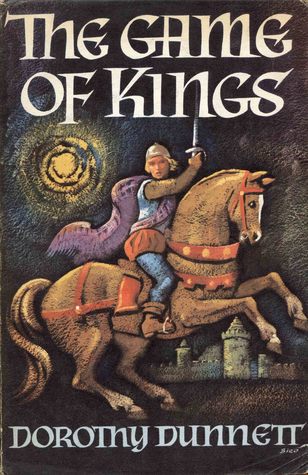
 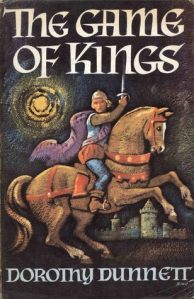 I read the ‘Lymond’ books – six novels of historical fiction beginning with The Game Of Kings in 1961 – at the insistence of my brother Byron, who himself had been given them to read by a fellow Army Officer, and continued with them as an undergraduate historian at St. Andrews.
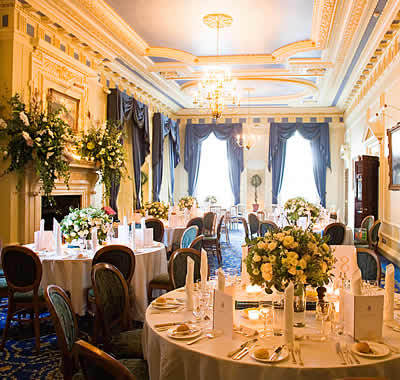
  I went on to read the eight Niccolò novels which prequelled them for myself. They are astonishing and addictive books without compare in genre or literary fiction. By coincidence, I was writing at the time for the rather serious The Times Literary Supplement – where Virginia Woolf first reviewed James Joyce’s Ulysses and Henry James and T. S. Eliot contributed – when her final novel, Gemini, came out. Her first book had been reviewed in The TLS (or Lit. Supp. as older readers know it), so I reviewed her last, and through it her life’s work. A little while later I received a letter to thank me – which is a rare occurrence in itself (General Lord Richards is the only other example that springs to mind) – but I went on to receive a telephone call, out of the blue, the following August inviting me to dinner at the Caledonian Club in London. We were the sole diners in the room (pictured below), as she liked to dine early, but we stayed late enough drinking her favourite whisky. I had turned 25, the month before, she had turned 78 the week before. It was one of the great encounters of my journalistic career.
  When I read her obituary less than three months after, I realised that she must have known she was terminally ill when she called me – the young unknown writer destined to be her last reviewer – and gave to me one of the few evenings she had left alive. Below is the review: naïve, portentous, but sincere and of some value. I hope it explains in part why her character has been chosen as the best Scotland has ever produced. Alexander Fiske-Harrison
The Times Literary Supplement
August 11, 2000
Connected by blood
Alexander Fiske-Harrison
GEMINI. By Dorothy Dunnett. 728pp. Michael Joseph. Pounds 18.99. TLS Pounds 15.99. 0 718 14083 4

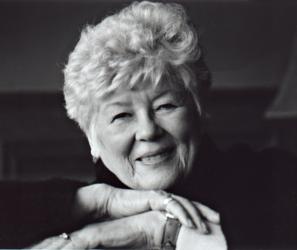
Lady Dorothy Dunnett, O.B.E., in a publicity photograph taken by her daughter-in-law
Dorothy Dunnett is a notable figure in the world of Scottish letters. Seventy-seven this month, she has completed the final novel in her eight volume The House of Niccolo series, the “prequel” to her six-volume The Lymond Chronicles (1961-75). Lady Dunnett has published twenty-three books (including a detective series, a novel about Macbeth and a guide to the Scottish Highlands) as well as serving as a trustee for the National Library of Scotland, on the board of the Edinburgh Book Festival, and as a Fellow of the Royal Society of Arts; in 1992, she received an OBE for services to literature. According to her own account, she was a professional portrait painter, first exhibiting in the Royal Scottish Academy in 1950, who ran out of novels by her favourite authors – the likes of Alexandre Dumas, Rafael Sabatini and Baroness Orczy. So her husband, the late Sir Alistair Dunnett – knighted for services to journalism and Scottish life in 1995 after sixteen years as Editor of The Scotsman – suggested she wrote her own. Her first book, The Game of Kings, was published in 1961.
The House of Niccolo series begins in 1459, with Niccolo, an eighteen-year-old dye-yard apprentice in Bruges. The period covered by the novel saw the beginning of a north-westerly migration of wealth from the Mediterranean basin, first to Bruges and Antwerp, and after, under the oppression of the Habsburgs, on to Amsterdam and London. An unprecedented explosion of wealth from trade led to a unique, and short-lived, social mobility between the mercantile classes and the landed aristocracy, giving rise to the merchant princes. The Renaissance was gaining momentum, much accelerated by an exodus of scholars to the West, following the fall of Constantinople six years earlier. Seven novels later, we find Niccolo a formidable figure, a master of trade and politics, who – among other adventures – has been present at the fall of Trebizond, visited the great schools of Timbuktu before its destruction in 1468, dabbled in the Cypriot succession and, most recently, fought with Charles the Bold at the Battle of Nancy.
Against this vast historical and geographical backdrop, a fictional family history unfolds. Niccolo was rejected as illegitimate by his mother’s husband, the beautiful and vicious Simon de St Pol, and when he tries to prove his legitimacy, he is met with force, both physical and financial, from Simon and Simon’s father, the formidable Jordan de Riberac. Niccolo works his way up from the lowly position they have forced on him, using a range of talents deriving from his almost superhuman abilities with mathematics, thus fulfilling the ideal of the Renaissance man.
Niccolo is soon in a position to exact revenge on Simon, and it is this which earns him the mistrust of his friends, especially when he attacks his paternal family by bankrupting their country, Scotland. This is symptomatic of his one great flaw; Niccolo lacks malice, but he has no conscience when lost in the workings of his own plans. “I’d begun to notice I’d gone too far . . . it was beautiful. Wheels are beautiful.” Scotland is also the winning stroke in his conflict of eight years with his wife, Gelis. She tries to prove herself his equal but ends by accepting that no one could be. By the beginning of Gemini, they are reunited, and Niccolo returns to Scotland for reparation and to neutralize the threat from his paternal family. An added difficulty is that Simon is blindly bringing up Niccolo’s son, Henry, as his own. The striking physical resemblance between Simon and Niccolo’s son could prove Niccolo’s origins, but he reckons the damage caused by such a revelation would be too great. The author has no such qualms, and in Gemini, Dunnett mercilessly ties up all loose ends. No more can be said without giving away the plot, for this is well and truly the last volume of a series. It can be read on its own, but should be taken as the conclusion of a great work.
Fiction is always constrained by fact, and nowhere more so than historical fiction, where the author must fit the story in the spaces between recorded history. This is why Sir Walter Scott held that historical figures should feature as secondary characters only. Dunnett gets around this difficulty by thorough research. There are something like 600 names in the character list for Gemini, of whom fewer than fifty are not “recorded in history”. This is perhaps too many, and is more than she has previously used.
In two areas, however, Dunnett seems to lose her attachment to a realistic historical narrative. The first is the weight given to astrology (hence the titles of the books) and divining, which increases as time passes. It is hard not to link this with her philosophy of history, which views the course of events as a directed stream, in an almost Hegelian sense, the avatars of which are the great men, fictional and real, who are central to her narrative. Dunnett may hold neither view personally, but both traits in the fiction suggest an underlying mysticism. Fortunately, the reader is not expected to swallow this completely.
Dunnett’s style is not the neutral prose of genre fiction and can be opaque and hard to read, especially in the early works. The rhythm of her writing is often awkward in descriptive passages containing unwieldy lists of information, and this is combined with an archaic manner, something of which historical novelists are often guilty. At times, this works with the melodramatic content to produce a powerful, almost operatic mixture. As Dunnett has progressed, her style has become less mannered, and has developed, exhibiting more modern techniques such as short, tight sentences and the use of repetition. Her strongest writing is in the dialogue (and internal monologues), where she displays her characters’ intelligence while masking their intentions. Her characters’ speech is filled with apt quotation, sometimes a little too much so. One would expect men of learning to know their Greeks, Romans and the Bible; obscure allusions to authors such as William Dunbar, the Pleiade poet de Baif, and the playwright John Heywood are used lightly – often just a phrase – and usually left unidentified and untranslated.
However, it is neither as a literary novelist nor as a historian, but as a writer of historical fiction that Dorothy Dunnett deserves recognition. She has taken two men, Lymond and Niccolo, who, like all heroes of romantic fiction, are described almost exclusively in superlatives, and thought about how such “megalopsychic” creatures would affect and be affected by those around them.
This psychological realism within the fantasy is matched by the convolutions of plot. A mere fifty pages before the end of Gemini, we discover that one of Niccolo’s oldest friends, familiar to the reader over 4,000 pages and twenty-five years, is one of his most implacable enemies. We then discover that Niccolo has always known this, and resisted taking action for reasons of consanguinity. The revelation is rendered credible by a lightly drawn but consistent trail of evidence and by the technique of never revealing a character’s whole thoughts, even when the narrative perspective is within the character’s mind. The author’s patience and complexity run through both series of novels, which are themselves linked, a fact made obvious by the first physical description of Simon. The publication of Gemini completes an ambitious literary circle.
P.S. When I say the writing of Dorothy Dunnett is an inspiration to me – as much as Dostoevsky or Hemingway, Wittgenstein or Camus – I mean it. Take for example this passage from my book on bullfighting Into The Arena, where I muse on the different types of courage whilst visiting the British Army on Salisbury Plain before taking a plane to run the bulls of Pamplona.
…[whereas the matador] must not only stand fast and use his training with the bull, but he must dance with it, linking a series of passes with the cape into a deliberately chosen faena, which contains within its graces and exquisite and esoteric death.
Which owes a rather obvious debt to the passage in The Game of Kings when Francis Crawford of Lymond enters into trial by combat with his own brother.
…[both siblings] were natural swordsmen. The slipping and tapping of the fine blades, the unfurling movements growing smokelike one within the other, showed no traces of the grim and gritty striving of a moment before. It was classic swordplay, precious as a jewel, beyond any sort of price to the men watching, and concealing within its graces an exquisite and esoteric death.

The Author




 Alexander's Journal