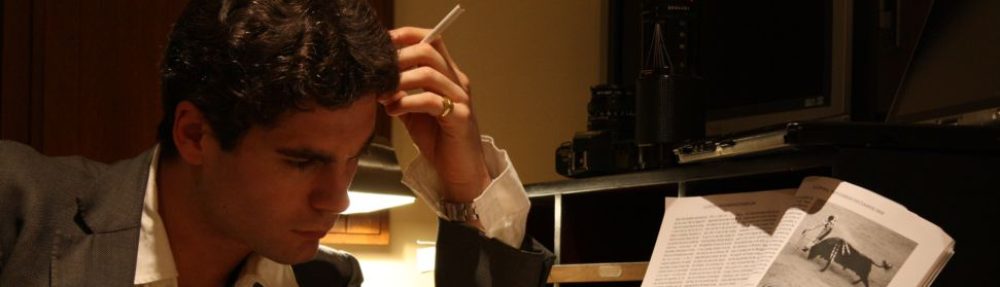
My latest article in The Spectator (and another one quoting me in the same issue)

Alexander Fiske-Harrison
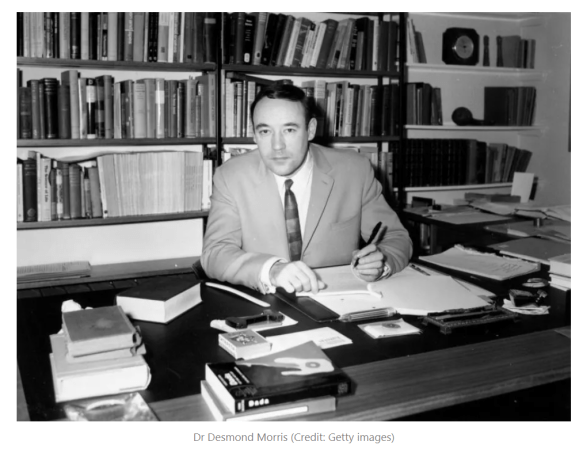
Desmond Morris was a master of provocative truths
25 April 2026
Article as published online here
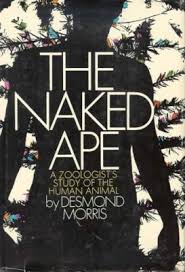
When the recently deceased zoologist Desmond Morris chose the title for his 1967 book – The Naked Ape – that would make his name, one wonders if he didn’t look back at the last book of ‘popular science’ in the field of biology. Charles Darwin’s 1871 The Descent of Man scandalised Victorian society by claiming that humans are descended from apes. Morris seemingly decided to go that one step further and claim that we still are apes, just hairless ones.
Morris was a master of provocative truths. He enjoyed generating pseudo-scandal by extrapolating from known scientific facts towards possible implications in realms which were difficult to stomach even in the Swinging Sixties. He put forward the idea, for example, that women’s lips emphasised with rouge were a form of signalling mimicry of their genital lips – the ‘naked ape’ indeed. Just as their breasts were meant to mimic the buttocks – the usual view for our primate ancestors, given their preferred sexual positions.
It was actually his next book, expanding on that topic – Manwatching – which caught my own teenage interest in the other subject that sells just as well as sex: violence. Morris pointed out that a man in an argument with a flushed face has all his blood in his skin, whereas a man with a pale face has all his blood in his muscles and therefore is far more likely to strike first.
Morris’s originality lay in altering how people perceived the human animal
It was dramatic inferences from observations like this that led me to biology as an undergraduate at Morris’s alma mater, Oxford. It was there, in the Tinbergen* Building which housed the then Faculty of Zoology, that I met him thirty years ago. These inferences continue to inform my work today, including my research on the interaction and co-evolution between humans and wolves and their domesticated descendant, the dog, for my book, The Children Of Wolves: How Men And Dogs Were Forged In The Land Of Ice.
Sex and violence are great selling points, but the true controversy that Morris caused was at a far deeper level. He lobbed the grenade of hard natural science – animal behaviour – into the soft social scientific soup of the then-dominant schools of psychology: post-Freudian analysis and Californian self-affirming therapy.
Morris’s originality lay in altering how people – civilian and scientist alike – perceived the human animal. He opened the door to other scientists who were not so much noted for their empirical research as the conceptual shifts they caused like his near-contemporary and friend at Oxford, Richard Dawkins, whose The Selfish Gene of 1976 shifted the paradigm from the communitarian sociobiology of E. O. Wilson and others back to the harsh Darwinian reality.
Interestingly, both came from the tutelage of one of the fathers of animal behaviour, *Niko Tinbergen, who argued for developed behaviours as a more predominant cause of behaviour, as opposed to Konrad Lorenz’s view of genetically determined instinct. (It is no coincidence that these giants of biology who met in 1936 endured very different wars, the developmentally-biased Dutchman as a prisoner of the Nazis, the genetically-slanted Austrian as a card-carrying member of the party, even though they jointly took the Nobel in 1973, the same year Morris went to work with Tinbergen.)
He did not, however, begin as a scientist but as an artist. In 1950, at the age of 22, Morris debuted as a painter alongside one of the fathers of surrealism, Joan Miró – he would later befriend Salvador Dalí as well – and only later did he turn to zoology.
Morris’s first book was The Biology Of Art in 1962. It was there that he posited that the urge to represent oneself artistically – common to all primates – came from the urge to make a mark on the world. This led to his painting work with Congo the chimpanzee. Courtesy of Morris, Congo had his own exhibition in 1957 at London’s Institute of Contemporary Arts.
It was reading about this that led to my own time with the bonobo Kanzi and his sister Panbanisha at Georgia State University’s Ape Language Research Centre in 2001. There I saw the limits of the strict academic, peer-reviewed scientific method that one can abandon in popular science. The biggest problem in dealing with great apes, who have five times the functional upper body strength of a human of the same weight, is getting them to submit to controlled study. Asking Kanzi, time after time through headphones, to identify which picture was of an apple rather than an orange, eventually led to him understandably losing his patience. He would tear the headphones off, break them in half and then flip a 200lb surgical steel table through the air with one hand.
Panbanisha, a bonobo, with her eldest son Nyota (Photo: Alexander Fiske-Harrison, 2001)
What was far more interesting to me, and apparently scientifically irrelevant, was what he would do when he was given a full head mask of a gorilla – the natural enemy of bonobos in the wild. He would put it over his own head and chase Panbanisha around the laboratory. At first, you could see her mock-fear as she ran from her brother, but that faux panic – as with a human child – began to degrade into true fear. At that point Kanzi stopped and took off the mask to reassure her it was still him. Then he handed her the mask, which she put on, and they began the game of chase again in the opposite direction.
That pretence of the bonobos perceiving their sibling as another, dangerous species is far more important than whether they could reliably identify 100 pictures or 101, use 300 symbols or 301. That, right there, is the suspension of disbelief, the origin of drama itself.
It is that realm of scientific outlay into the wider world of human existence, that speculation beyond what academic authority will allow, that Morris opened the door to. And many others, including myself, have continued to pass through, combining art and science, license and scholarship, to speculate in ways that continue to fascinate us to this day.
P.S. It was nice to see on the same weekend as the above article of mine appeared in The Spectator, my words on a very different part of the animal world quoted in another article (online in full here): 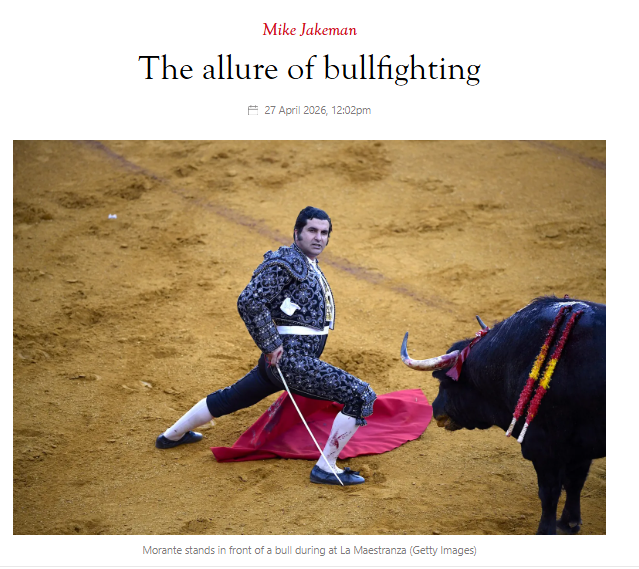
“For the six days in April, the Maestranza ring in Seville is the centre of the bullfighting world. During one of the traditional corrida, Spain’s greatest living matador, Jose Antonio Morante, made a mistake. Local press described ‘un exceso de confianza’. Suddenly, he found himself with the bull at his back, charging, and was gored at the top of his thigh, suffering injuries so eye-watering that they made international news. One of his colleagues, Roca Rey, was also hospitalised several days later, with a severe injury to his right leg. Morante described the ‘immense pain’ of the incident. Sport has a complex relationship with danger…. The appeal to the audience is straightforward. Some are agonised or repulsed by introducing physical danger into something as ephemeral as sport. But for the rest, there is more riding on the outcome of dangerous pursuits. Ther is more tension to the proceedings and a greater rush at their conclusion. (Bullfighting enthusiasts may bristle at this. The leading English-language chronicler, Alexander Fiske-Harrison, does not consider bullfighting a sport, as ‘no-one keeps score and there is no way for anyone or anything to win’. He prefers to think of it as a category of performance art, whose success is determined by ‘how much the audience has been emotionally moved’.)”

