Unknown's avatar

About fiskeharrison

English author and journalist, broadcaster and conservationist. Author of 'Into The Arena: The World Of The Spanish Bullfight', shortlisted for the William Hill Sports Book Of The Year. Editor & Co-Author of 'The Bulls Of Pamplona' with John Hemingway, grandson of Ernest, Beatrice Welles, daughter of Orson and the Mayor of Pamplona. Author of 'The Feldkirch Crossing & Other Fictions', finalist for Le Prix Hemingway in 2016, 2017 & 2021.

My latest article in The Telegraph: The forgotten corner of Austria filled with secrets


THE TELEGRAPH


TRAVEL


The forgotten corner of Austria filled with secrets

Events that shaped history were forged in the ‘salt domain’ region of clouded peaks and mysterious valleys to the east of Salzburg


The original article at full length can be found for subscribers at The Telegraph online here. 

Travel writers are often asked for the secret places within their areas of expertise. We have a stock of them, usually snapshots and moments that led on to other stories. In Austria, I think of learning the hidden cultural heritage of Salzburg from the Unesco professorial chair of the subject Kurt Luger or being introduced to what is now my favourite drinkMost, a dry still apple wine, by former champion skier Rupert Pichler on the slopes of Sport Gastein where they host the Imperial Snow Polo Cup.

However, there is one area of Austria that is not so much secret, as filled with secrets. Continue reading

Shortlisted for Le Prix Hemingway International: The Short Story Award of Au Diable Vauvert in France

As I said in my last post about my other nomination in the Financial Times-Oxford Literary Festival, it is always nice to be listed and good luck to us all.

It is particularly impressive for this one that they wrote the nomination in English, as well as French and Spanish, given that I was the only writer in the language on the list. (I note that when I was previously a finalist for Le Prix Hemingwa –  and published in the annual collection of short stories by Au Diable Vauvert half a decade ago – they did not. Perhaps it is a Brexit thing.) Continue reading

My latest article in The Telegraph: Once the ‘Monaco of the Alps’, this forgotten spa town is poised for a comeback

THE TELEGRAPH

TRAVEL

Once the ‘Monaco of the Alps’, this forgotten spa town is poised for a comeback

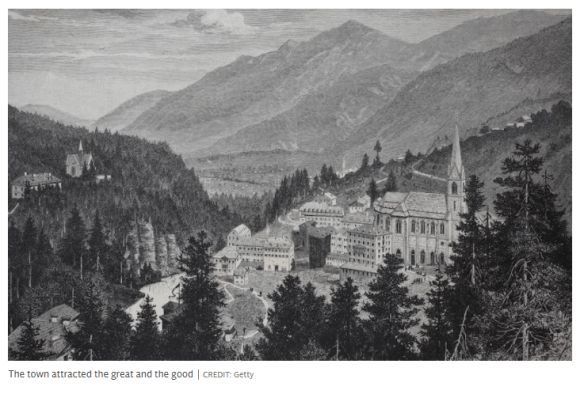
Bad Gastein, now eerily quiet, was a magnet for high society during the Austro-Hungarian Empire

The original article at full length can be found for subscribers at The Telegraph online here. 

When I first came to Bad Gastein, a year ago, I could not believe that I had not only never been here before, but had never even heard of it. The vagaries of its notability in history are almost as cyclical as the rise and fall of stock markets.

In February 2020, it seemed to me a classic bustling ski resort, with extraordinary, high-level skiing, comprising 200km of pistes, half of them red runs. Admittedly, the languages you heard in the après-ski establishments tended more towards the Germanic than the frequent smatterings of English or French one might hear in Zermatt or Val d’Isère.

However, what really struck me was the look of the town. Built into the steep mountain slopes, its vertiginous streets are lined with exquisite fin de siècle houses from the heyday of the Austro-Hungarian Empire. Even the train station – 90 minutes to Salzburg, 3 hours to Munich – is an Art Deco gem, opened  by Emperor Franz Joseph himself in 1905, the first such station in the Eastern Alps.

For this was the Imperial resort. The Prussian Kaisers would come and meet their Habsburg Emperor cousins here to enjoy the waters and the walking, for both of which it had been famed since the 7th century. Of course, in those pre-skiing days, summer was the high season.

For this was the Imperial resort. The Prussian Kaisers would come and meet their Habsburg Emperor cousins here to enjoy the waters and the walking, for both of which it had been famed since the 7th century. Of course, in those pre-skiing days, summer was the high season. Continue reading

Evening Standard: Fiske In The Spotlight

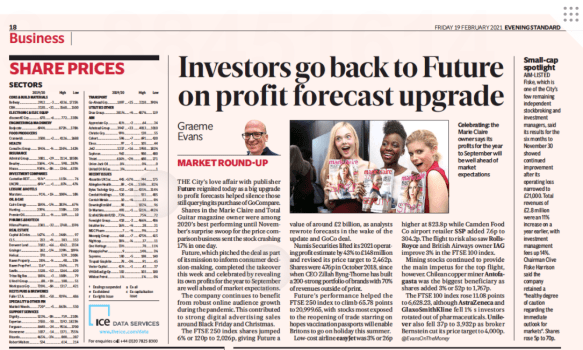
Good news from Fiske Plc today (February 19th), of which I am a director, in a nice little article in the newspaper of record for the capital, and the daily read on the way home to those who still work in ‘The City’ of London, the Evening Standard. Despite the good half-year results, my father Clive’s quote is as judicious as ever.
Alexander Fiske-Harrison

Small-cap spotlight

AIM-LISTED Fiske, which is one of the City’s few remaining independent stockbroking and investment managers, said its results for the six months to November 30 showed continued improvement after its operating loss narrowed to £21,000. Total revenues of £2.8 million were an 11% increase on a year earlier, with investment management fees up 14%. Chairman Clive Fiske Harrison said the company retained a “healthy degree of caution regarding the immediate outlook for markets“. Shares rose 5p to 70p.

My latest article in The Telegraph: The European countries with the strictest lockdowns have come out no better


THE TELEGRAPH


COMMENT


The European countries with the strictest lockdowns have come out no better

I’ve been under different lockdowns in Spain, Austria and the UK – and still, there are no clear winners


(The full length and slightly edited version can be found by subscribers at The Telegraph online here.)


Since the beginning of the novel coronavirus pandemic I have written in these pages about the European countries in which I have suffered their various countermeasures.

I witnessed Marines patrolling the streets in one of the hardest lockdowns in Europe, Spain, where I ran a half-marathon inside a small apartment in an attempt to stay sane and fit while they locked their physically vulnerable elderly and psychologically vulnerable children away from all sunlight and exercise, despite the measurable protection these two factors offer against the virus.

I returned to England when I was allowed, and was invited to bear witness to the catastrophic collapse of the hospitality industry, with hotels and restaurants desperately trying to outweigh the off-putting countermeasures of the odour of bleach, enforced hand-sanitisation, masks, and social-distancing, by practically begging customers – and travel writers like myself – to visit.

(Thank you to the lovely Gilbeys Restaurant & Townhouse in Eton, the splendid Old Parsonage Hotel & Grill in Oxford, the comforting The Winning Post pub in Windsor Great Park and the splendour of Mossiman’s at Guards Polo Club – I hope you all make it: you certainly deserve to.) Continue reading

My postcard in The Telegraph: While Britons are imprisoned, Austrians are encouraged to get out, stay fit, and soak up vitamin D


THE TELEGRAPH


TRAVEL


While Britons are imprisoned, Austrians are encouraged to get out, stay fit, and soak up vitamin D

Cases have plummeted 90% in Austria, and without the sort of draconian rules Britain has adopted


(The original article can be found by subscribers at The Telegraph online here.)

With the snow piling thick on the ground in Salzburg, I am amazed at two things in Austria which I do not think are unrelated.

The first is that neither temperature nor lockdown has in any way affected the average citizens’ visibility in the streets.

When I walk out of my front door on the Nonnberg, adjacent to the ancient convent where Julie Andrew’s portrayed a novitiate in The Sound Of Music, there are invariably locals tramping up and down the stairs and slopes, wading through drifts and sliding across ice, to stare at alpine mountain ranges in the middle distance.

As they say here, there is no such thing as bad weather, only the wrong clothes.

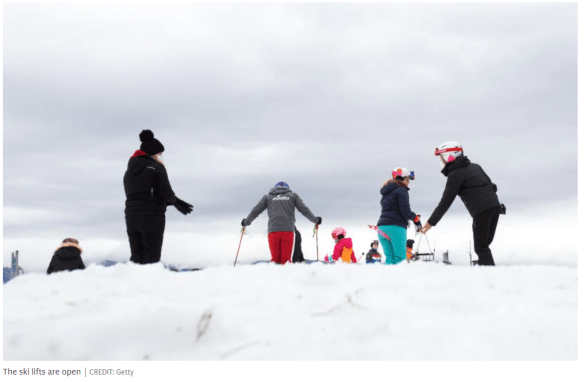
The second striking fact about living in Austria is that during this ‘lockdown’ – their third – in which you may leave your house at any time of day or night for any reason, psychological or physical, they have reduced the contagion of this novel coronavirus by 90% since mid-November.

Yes, it is true that bars, restaurants and hotels are all closed, and only one person from a household may visit “close family members” or “important contacts with whom contact is maintained several times a week” in another household.

Continue reading

My article in The Telegraph: As an expat in Vienna, I love everything about Europe (except the EU)


THE TELEGRAPH


COMMENT


As an expat in Vienna, I love everything about Europe (except the EU)

Selfishly, I have indeed benefited from the EU, but that’s not to say it’s the best thing for Britain


(The original article can be found by subscribers at The Telegraph online here.)

It was at a lunch with several grandees of old Vienna where I was forcibly reminded that it was in this city that the longest European peace since the original ‘Pax Romana’ – from the fall of Napoleon to the rise of the Kaiser – was negotiated between a British Foreign Secretary, Viscount Castlereagh, and Prince Metternich, the chief negotiator of the European Unionists of that epoch, the Habsburg Monarchy, who had only just renounced the title of Holy Roman Emperor.

The 1815 Congress of Vienna was soon followed, in 1820, by Britain’s official and complete withdrawal from European affairs into “splendid isolation”. The effects of this, the original Brexit, were so positive that one US Secretary of State, Henry Kissinger, would later publish his Harvard PhD thesis on the period under the title ‘A World Restored’.

Personally, there is no denying that as a British citizen living in Mitteleuropa, and who spent the first lockdown as a resident in Spain, I have encountered a great deal of incomprehension among my Continental friends as to why Britain would want to leave this benevolent, if quasi-Imperial, set up.

And, as an Englishman with an Austrian girlfriend, a Belgian shepherd dog and a breeding herd of horses all descendant from an Irish thoroughbred (Elstar, first cousin to the legendary Frankel no less), I truly do see myself as, in Metternich’s own phrase, “a Citizen of Europe”. Continue reading

My postcard in The Telegraph: Salzburg is well-suited to lockdown – scenic, old-fashioned and healthy

Scenic, old-fashioned and healthy – Salzburg is well-suited to lockdown

Fresh air, regular exercise and a diet of moderation are all we have here until the vaccine comes

My dispatch in The Telegraph: From Vienna, ‘I woke from my Covid sickbed to the sound of gunfire’

‘I woke from my Covid sickbed to the sound of gunfire’ – dispatch from Vienna


On the eve of the city’s second lockdown, it faced a new – yet all-too familiar – trauma

Having just written a postcard in these pages praising Vienna as the best travel destination I have visited in some time, I did not expect to be writing again so soon, and under such different circumstances.

Last night at 8pm an unknown number of armed men fanned out into the streets of the first district where I am staying and opened fire at random, in a manner all-too familiar these days, while invoking the greatness of God in his Qur’anic name.

Reports have the shooters moving down from the city’s main Synagogue to the seat of its Archbishop, St. Stephen’s Cathedral, although this is more likely a ‘happy’ coincidence for the terrorists involved. This is the main pedestrianised bar area in Vienna’s old city, and they struck, with neither provocation nor warning, on the night before the city returns to lockdown due to a surge in hospitalisations for Covid-19.

The police response was rapid. One terrorist was shot on the spot, later identified as a 20-year-old Albanian, with dual Austrian and North Macedonian nationality, who had been sent to jail for attempting to join Islamic State in Syria, but released a year early from his 22-month sentence in December. Continue reading