A great evening at the Embassy of Spain in London.
Una gran noche a la Embajada de España en Londres.


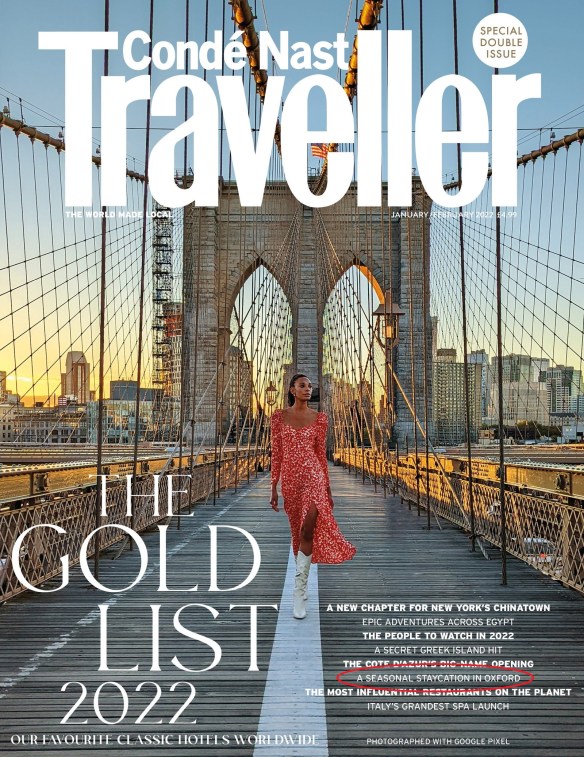
I have a fondness for smaller cities. Compared to the great metropolises, they are more discrete, more human in their scale. They are also often built upon a single resource. One thinks of Salzburg, with its salt mines, or Seville, which hosted all the gold of the Americas. Oxford is the most human of all, though, as it is built on the very commodity which puts the sapiens into Homo sapiens. Here, they mined wisdom.
I remember my own sense of awe when I arrived as an undergraduate in the mid-1990s – first as a biology student under one of Kenya’s greatest ecologists, and then studying philosophy under a tutor whose own tutor could trace a direct line, tutor to tutor, back to Immanuel Kant himself. I remember how, in the warm autumn sun, the university buildings stood like vast stone-clad thrones for the human mind – their distinctive golden colour coming from the ancient coral reefs that fossilised to form the limestone deposits of nearby Headington.
To read more click here…
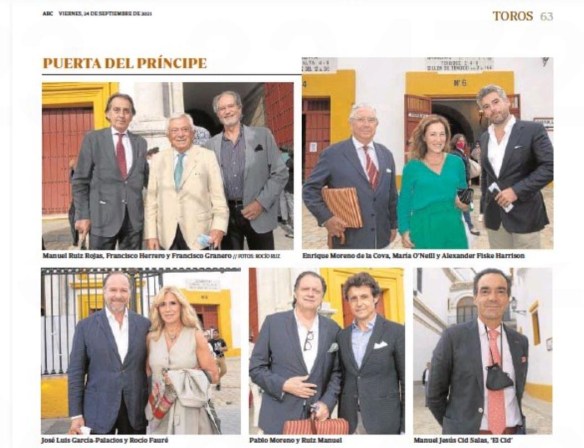
ABC de Sevilla, ABC of Seville, Puerta del Principe, Gate of the Prince, La Real Maestranza, The Royal Maestranza, Plaza de Toros, The Bull Ring, Feria, Feria de Abdul, April Fair, Feria de San Miguel, The Bullfight, La Corrida, Victorino Martín, Antonio Ferrera, El Cid, España, Spain, Matador, Torero, Bullfighter, Alexander Fiske-Harrison, Enrique Moreno de la Cova, Maria O’Neill, Maestrante
Seville


Travel writers are often asked for the secret places within their areas of expertise. We have a stock of them, usually snapshots and moments that led on to other stories. In Austria, I think of learning the hidden cultural heritage of Salzburg from the Unesco professorial chair of the subject Kurt Luger or being introduced to what is now my favourite drink, Most, a dry still apple wine, by former champion skier Rupert Pichler on the slopes of Sport Gastein where they host the Imperial Snow Polo Cup.
However, there is one area of Austria that is not so much secret, as filled with secrets. Continue reading

As I said in my last post about my other nomination in the Financial Times-Oxford Literary Festival, it is always nice to be listed and good luck to us all.
It is particularly impressive for this one that they wrote the nomination in English, as well as French and Spanish, given that I was the only writer in the language on the list. (I note that when I was previously a finalist for Le Prix Hemingwa – and published in the annual collection of short stories by Au Diable Vauvert half a decade ago – they did not. Perhaps it is a Brexit thing.) Continue reading
Always nice to be listed: good luck to us all.
Alexander Fiske-Harrison


When I first came to Bad Gastein, a year ago, I could not believe that I had not only never been here before, but had never even heard of it. The vagaries of its notability in history are almost as cyclical as the rise and fall of stock markets.
In February 2020, it seemed to me a classic bustling ski resort, with extraordinary, high-level skiing, comprising 200km of pistes, half of them red runs. Admittedly, the languages you heard in the après-ski establishments tended more towards the Germanic than the frequent smatterings of English or French one might hear in Zermatt or Val d’Isère.
However, what really struck me was the look of the town. Built into the steep mountain slopes, its vertiginous streets are lined with exquisite fin de siècle houses from the heyday of the Austro-Hungarian Empire. Even the train station – 90 minutes to Salzburg, 3 hours to Munich – is an Art Deco gem, opened by Emperor Franz Joseph himself in 1905, the first such station in the Eastern Alps.
For this was the Imperial resort. The Prussian Kaisers would come and meet their Habsburg Emperor cousins here to enjoy the waters and the walking, for both of which it had been famed since the 7th century. Of course, in those pre-skiing days, summer was the high season.
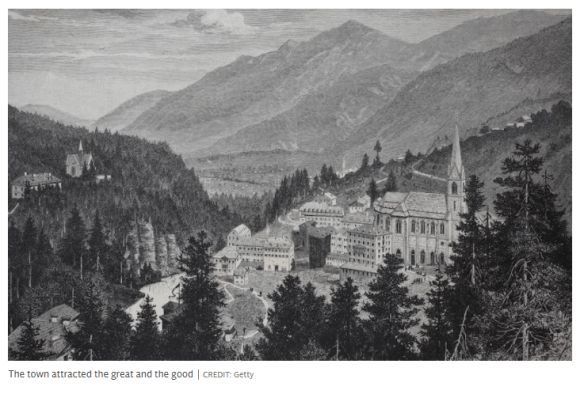
For this was the Imperial resort. The Prussian Kaisers would come and meet their Habsburg Emperor cousins here to enjoy the waters and the walking, for both of which it had been famed since the 7th century. Of course, in those pre-skiing days, summer was the high season. Continue reading

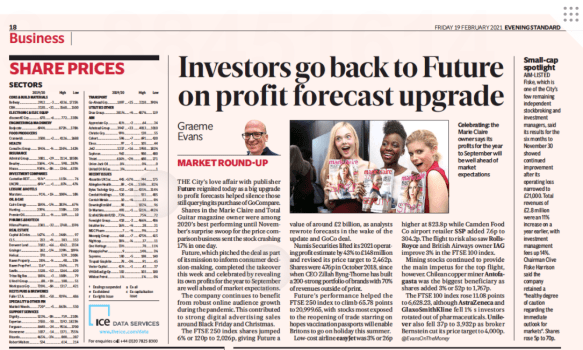
AIM-LISTED Fiske, which is one of the City’s few remaining independent stockbroking and investment managers, said its results for the six months to November 30 showed continued improvement after its operating loss narrowed to £21,000. Total revenues of £2.8 million were an 11% increase on a year earlier, with investment management fees up 14%. Chairman Clive Fiske Harrison said the company retained a “healthy degree of caution regarding the immediate outlook for markets“. Shares rose 5p to 70p.


Since the beginning of the novel coronavirus pandemic I have written in these pages about the European countries in which I have suffered their various countermeasures.
I witnessed Marines patrolling the streets in one of the hardest lockdowns in Europe, Spain, where I ran a half-marathon inside a small apartment in an attempt to stay sane and fit while they locked their physically vulnerable elderly and psychologically vulnerable children away from all sunlight and exercise, despite the measurable protection these two factors offer against the virus.
I returned to England when I was allowed, and was invited to bear witness to the catastrophic collapse of the hospitality industry, with hotels and restaurants desperately trying to outweigh the off-putting countermeasures of the odour of bleach, enforced hand-sanitisation, masks, and social-distancing, by practically begging customers – and travel writers like myself – to visit.

(Thank you to the lovely Gilbeys Restaurant & Townhouse in Eton, the splendid Old Parsonage Hotel & Grill in Oxford, the comforting The Winning Post pub in Windsor Great Park and the splendour of Mossiman’s at Guards Polo Club – I hope you all make it: you certainly deserve to.) Continue reading
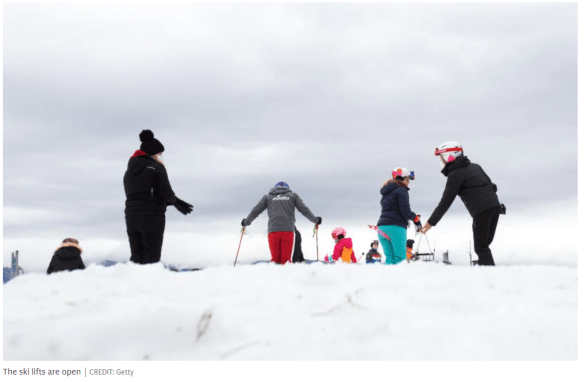
With the snow piling thick on the ground in Salzburg, I am amazed at two things in Austria which I do not think are unrelated.
The first is that neither temperature nor lockdown has in any way affected the average citizens’ visibility in the streets.
When I walk out of my front door on the Nonnberg, adjacent to the ancient convent where Julie Andrew’s portrayed a novitiate in The Sound Of Music, there are invariably locals tramping up and down the stairs and slopes, wading through drifts and sliding across ice, to stare at alpine mountain ranges in the middle distance.
As they say here, there is no such thing as bad weather, only the wrong clothes.
The second striking fact about living in Austria is that during this ‘lockdown’ – their third – in which you may leave your house at any time of day or night for any reason, psychological or physical, they have reduced the contagion of this novel coronavirus by 90% since mid-November.
Yes, it is true that bars, restaurants and hotels are all closed, and only one person from a household may visit “close family members” or “important contacts with whom contact is maintained several times a week” in another household.

