My column in The Olive Press: Armed Struggle

My latest, and fourth, column entry is Spain’s number one English language newspaper. AFH

The Olive Press

July 26th-August 8th – Vol. 17 Issue 424

At Home With Xander:

Armed Struggle

NAVARRA could not be more different from Andalucia.

Down in the south they provide an archetype of Spain, propagated as something of a national myth since the 19th century and a lure to foreign holiday makers and their money. In reality, Andalucia was once an endless warzone, out of which the survivors built unions of   Castilian formality merged with Moorish art and flamenco.

In contrast, Navarra was once a great kingdom, spanning both sides of the Pyrenees, and later absorbed by the Catholic Kings, Ferdinand and Isabella, in their 15th century reconquest and unification of Spain. The French side came to be abandoned as indefensible by their grandson, the Holy Roman Emperor Charles V in the 16th, but the his- tory and influence remain. It is beautiful, verdant countryside, which I have walked through many times on the Ruta De Santiago, or Way of St James.

As you cross the border through the stunning Roncesvaux Pass nothing changes except the name to Roncesvalles.

Many locals actually call it ‘Orreaga’, as Basque was the original language here and has had a strong resurgence   since the 1970s, even if the   politicians who encourage the region’s separation – and once used armed struggle to do so – now take a hammering at the ballot box.

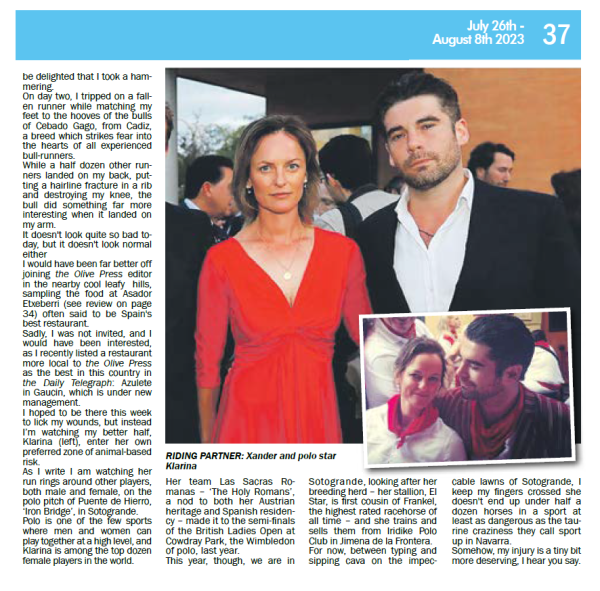
Speaking of armed struggle,   mine is struggling to work after running the bulls in Pamplona, the capital of Navarra. Judging by the comments section on previous columns, many readers will…

Click to enlarge

…be delighted that I took a hammering. Continue reading

My article in The Telegraph: A journey on the most storied railway in Spain

THE TELEGRAPH

TRAVEL

A journey on the most storied railway in Spain

For the original article, available to subscribers only, please click here. It is also available, for free, on MSN here.

(This follows on from my Telegraph article on Gaucín three years ago,  ‘A postcard from Spain’s most picture-perfect town‘, which went viral in Spain, from national newspaper ABC to ¡Hola! magazine.)

Gibraltar has always been an outpost. In antiquity it was one of the Pillars of Hercules on which were inscribed the warning to sailors: “nothing further beyond”. Its name derives from the Berber military commander who landed there and began the Moorish conquest of Spain in 711 AD. A thousand years and 14 sieges later the Rock became a British fortified-enclave. However, under the blistering Spanish sun its confines bred fever and mutiny. The inhabitants craved access to the mainland, looking up to the cooler mountains of Ronda, two days’ ride away up rocky, bandit-stricken trails.

To cater to this need, Alexander Henderson founded the Algeciras-Gibraltar Railway Company in 1888 in a deal with the Spanish government. Henderson had already built railroads across the mountains and jungles of South America. Not permitted to run the railway onto British soil, Henderson arranged a daily steamboat across the bay to the first station on the line at Algeciras, and all materials were shipped from England, right down to the station clocks. The result was – and still is – one of Europe’s most remarkable train journeys, but which today takes tourists, rather than British army officers, to Ronda in 90 minutes for €11.50.

To ensure comfortable digs both before boarding and at journey’s end, Henderson also hired the architect of The Savoy to build the Hotel Reina Cristina at Algeciras and a sister establishment, the Hotel Reina Victoria, in Ronda. There are also stops in San Roque and Gaucín, offering the chance to break up the journey.

Today, Algeciras is an industrial port city and the Reina Cristina (rooms from £90), while a grand structure, is run down, its rolling gardens out of place between the docks and tenement buildings. In its time it hosted movie stars and politicians: Orson Welles and Ava Gardener, Roosevelt and Churchill (both as Prime Minister and earlier, as Telegraph reporter at the Algeciras Conference on the fate of Morocco in 1906). Its carefully restored twin in Ronda, the Reina Victoria (rooms from £100), remains a lovely hotel.

There are three daily trains along Mr Henderson’s Railway, departing at 06:20, 10:50 and 17:04. I boarded the second and headed out towards the mountainous backdrop of the Serranía de Ronda. The rails are far nicer than the road, exchanging motorways and flyovers for verdant coastal countryside. The steam trains have gone, but their smooth, air-conditioned replacements, operated by Renfe (the state-owned railway), are perfectly good.

The original passengers were often British Army officers, which explains why the first stop along the line is San Roque, home to the luxurious Sotogrande with its famed polo clubs. It was the British Army who adopted this equestrian sport while serving in India and went on to teach it to the horse-obsessed Spanish nobility.

I disembark and head for lunch at the restored 18th-century marvel that is El Monasterio, one of the most beautiful small hotels in Andalusia. Afterwards I catch a practice session at the neighbouring polo ground, Luciano Irazábal and Nano Iturrioz’s ‘Iron Bridge’, and see Klarina Pichler, semi-finalist in last July’s British Women’s Open at Cowdray Park, the Wimbledon of the Game of Kings, and who coaches the British Royal Dragoon Guards who brought the sport to Europe. (Indeed, she is the only British Hurlingham Polo Association licensed instructor in Spain.)

I make the last train from San Roque at 17:18. From here it is all about the views and admiration of the technique and industry required to dynamite your way through the hillsides to follow the mountainous forest-course of the river Gaudiaro through the sparkling wonders of the Natural Park of Los Alcornacales.

A little over an hour later I arrive at Gaucín station, although it is a few miles from the town so a taxi is required. The last time I was here it was under the shadow of Covid-19. I am pleased to see Daniel Beauvoir’s La Fructuosa (rooms from €110) remains the most pleasant of village retreats, with elegant and spacious rooms looking out over the valley.

The real surprise, though, is Restaurant Azulete, under the new management of a Franco-Colombian couple: Parisian chef, Gabriel Arnaud, who met his wife Daniela Rodriguez while they were working Ferran Adrià of El Bullí fame, before they came here. In 25 years of writing about this country, I can’t recall a finer dining experience.

The final section of track winds through an undulating landscape, softening from epic to pastoral, a transition highlighted by the stop-motion effect of a dozen tunnels within 40 miles.

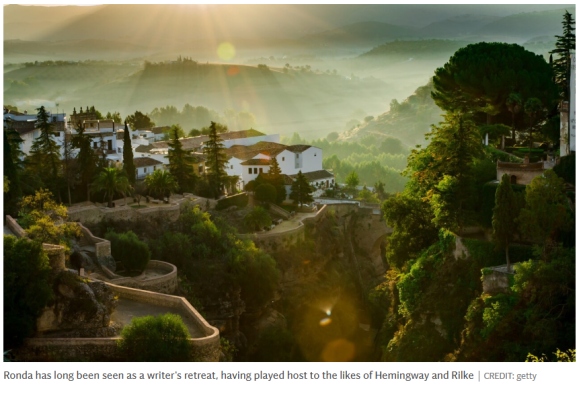
At the end of it all lies Ronda, the haven. A writer’s retreat, it has statues to visitors like Hemingway, the centenary of whose first visit to Spain is this year, and the Austrian poet Rilke.

I meet Jon Clarke, editor of the local English newspaper, at the tapas bar La Barrafina. He updates me on the gossip over thin-sliced jamón ibérico – the owner is a national champion jamón-cutter – and ice-cold manzanilla, before I check into one of his wife Gabriella’s self-catering apartments (rooms from €140), hidden gems a short walk from the Arab Baths along the city walls.

From there one can stroll up past the three historic bridges – Arab, Old and ‘New’ (1790s in vintage, 390 feet in height) – culminating in the vertiginous glories of the Tajo gorge, one of the most visited monuments in Spain.

Next to it is another, the 450-year-old Maestranza plaza de toros of Ronda, still operated by the longest running dynasty of matadors, whose present title holder, Cayetano Rivera Ordoñez, excels in the ring to this day.

Finally, one is at the breezy summit of one of the peaks of Spain’s history and culture. The steam from the locomotives may have long ago evaporated, and the gun-smoke of the bandits has dispersed, but the poetry of this coast-to-mountain, British-built train service remains as uplifting as it always was.

Article about me in The Times

THE TIMES

Hemingway’s bullfight passion honoured in Pamplona 100 years on

Isambard Wilkinson, Madrid
Wednesday July 06 2023

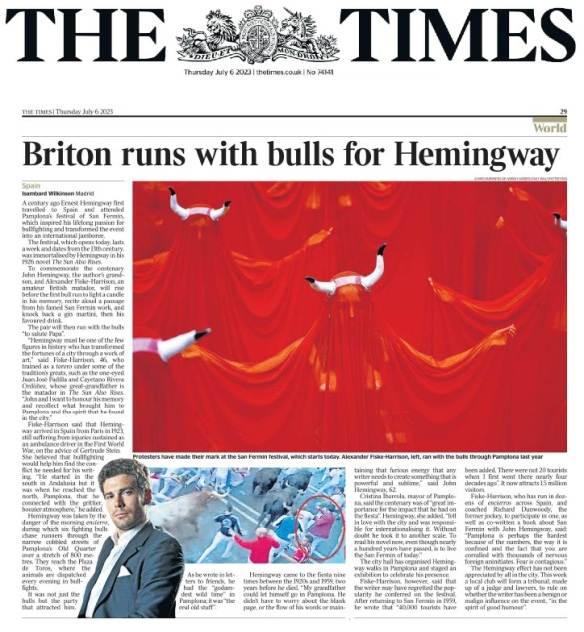
A century ago Ernest Hemingway first travelled to Spain and attended Pamplona’s festival of San Fermin, which inspired his lifelong passion for bullfighting and transformed the event into an international jamboree.

The festival — which opens on Thursday, lasts a week and dates from the 13th century — became a worldwide phenomenon after Hemingway immortalised it in his 1926 novel, The Sun Also Rises.

To commemorate the centenary John Hemingway, the author’s grandson, and Alexander Fiske-Harrison, an amateur British matador and bullfighting expert, will rise before the first bull run on Thursday… (read on in the image below or follow this link to The Times website.)

My article in The Telegraph: Austria wants to restore rail’s golden age – my sleeper train to Salzburg suggests it try harder

THE TELEGRAPH

TRAVEL

Austria wants to restore rail’s golden age – my sleeper train to Salzburg suggests it try harder

The golden age of the sleeper-car railways began 140 years ago. That summer, the quintessence of luxury trains set forth on its maiden voyage from Paris to Vienna. The Orient-Express was the pinnacle of design and hospitality in travel.

In those days, the train was the fastest thing their was: twice as fast as a galloping horse. Only a cheetah could beat it by a nose, and then only over two furlongs. It was fifty years before the automobile or aeroplane could compete for speed.

In fact, trains were so unnaturally fast that the medical community railed against them, suggesting they could cause hysteria in women, mania in men, and death through vibrational organ failure in both. Despite this, the locomotive was and remains the safest method of fast transport available. Horses bolt – taking any carriages they might be drawing with them – and automobile and even aeroplane crashes remain far more probable and lethal than derailments. There are also the environmental arguments.

The Orient Express last ran in 2009. The hotel on rails which took its name – and its 1920s-issue carriages – is an unrelated venture. It is a travel experience, not a form of transport eastward.  

However, when the delusional global blanket of COVID-19 restrictions was lifted, ÖBB, Österreichische Bundesbahnen ‘Austrian Federal Railways’, opened the Nightjet, a sleeper service on the same route Paris-Vienna line as the original OE.

There is something about the idea of trains which has always fuelled the literary and cinematic imagination. The railways are places of romance – Brief Encounter – and revenge – Murder On The Orient Express – of psychopathic killers – Strangers On A Train – and secret agents – From Russia With Love.

My theory is that when fiction writers, who live by imagination and pursue a solitary profession, are put on trains, they are forced into proximity with people about whom they know nothing. After a few hours fantastical thoughts naturally begin to form. As Graham Greene put it, one is “compulsorily at rest; useless between the walls of glass to feel emotion, useless to try to follow any activity except of the mind; and that activity could be followed without fear of interruption.”

So, invited to view the restoration of the 19th century holiday home of Emperors, the Grand Hotel Straubinger in Bad Gastein outside Salzburg (read more on this project and the Imperial Snow Polo Cup in my article in The Telegraph, outside the subscription paywall online here), I opted to travel all the way from London by rail.

Dining Car: A steward in the dining car of the Orient Express as it leaves Victoria Station, London, 1982.

The rest of this article is available to subscribers of The Telegraph online here

THE LAST ARENA: The Hemingway Prize 2022

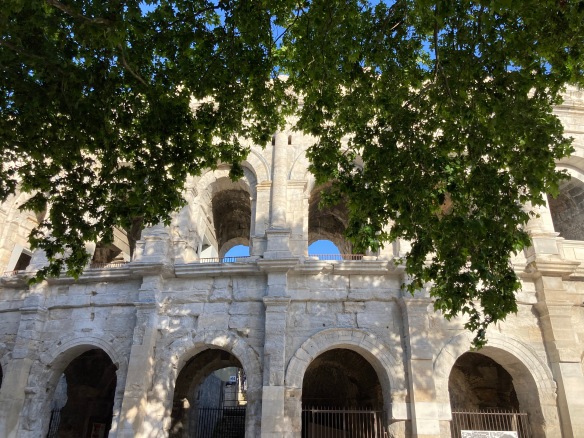
I have just arrived back in Nîmes for the French literary award, Le Prix Hemingway 2022, for which I am shortlisted (once again.)

I thought I would put up the composite draft of the original English, the excellent translation by Monique Allier-Chay, and my edit of that translated back into English. It may, as a result, have a clumsiness at the beginning in English, but has all of the power I intended at the finish.

It was published by Les Avocats du Diable in French (Amazon UK here, US here, France here, Spain here, Germany here) my English version is below.

Alexander Fiske-Harrison

THE FLIGHT OF THE CONDOR


AT first the blood had poured between his fingers like dark water seen swirling around rocks. The pain had been almost unbearable, but he had known pain enough in life to know it was nothing more than a mist one moved through. Think about something else. Where were they? They should be here by now.

Finally, he could hear voices and he knew that was good, for although the bleeding had slowed to a trickle, he knew his thoughts were drifting as his will diminished.

¡Espera, torero! Estaremos ahí. Es peligroso, quédate quieto.

He noticed one of his hands had fallen away from the wound, and he looked at the limb. It felt cold, and he knew that was bad. He tried to move it back into place, but it merely rolled on the ground. The sand felt different, colder than the hand, although all sensation was going now. As was vision. He could hear, just.

A voice said something indistinguishable in German. Which was strange, he thought.

To read on please click here to go The Last Arena where it is published in full. 

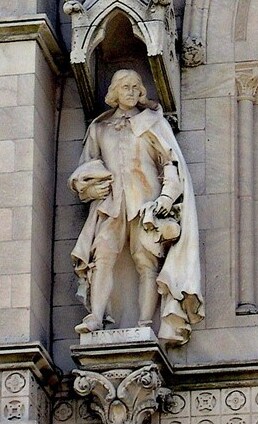
Ancestor: John Haynes, 1st Governor of Connecticut, 4th Governor of the Massachusettes Bay Colony

Statue of John Haynes, north facade of Connecticut’s State Capitol building

John Haynes (May 1, 1594 – January 9, 1653), was a colonial magistrate and one of the founders of the Connecticut Colony. He served one term as governor of the Massachusetts Bay Colony and was the first governor of Connecticut, ultimately serving eight separate terms. Although Colonial Connecticut prohibited Governors from serving consecutive terms at the time, “John Haynes was so popular with the colonists that he served alternately as governor and often as deputy governor from 1639 to his death in 1653.”

Haynes was influential in the drafting of laws and legal frameworks in both Massachusetts and Connecticut. He was on the committee that drafted the Fundamental Orders of Connecticut, which has been called one of the first written constitutions. He also invested most of his fortune in Connecticut, “to the ruine of his famylye in Englande”.

From Burke’s Peerage:

Rev John FISKE, Rector of Thorpe Morieux, Suffolk 1719–53, ordained as a Priest 25 December 1719 at a special ordination in Kings Street Chapel, Westminster by the Bishop of Lincoln, baptised 28 December 1693, educated at Queens’ College Cambridge (MA), married Elizabeth Gosnold, daughter of the Rev Lionel Gosnold, Rector of Otley, Suffolk, (great, great, great, great, great, great grandson of George Plantagenet, Duke Of Clarence, younger brother and sometime heir to King Edward IV, elder brother to King Richard III, see Burke’s Peerage THE PLANTAGENET DYNASTY) and died 4 October 1764, having had with other issue,

(First cousin of Captain Bartholomew Gosnold, one of the founders the first British colony in the United States, Jamestown, and after whose daughter, Martha, Martha’s Vineyard is named.)
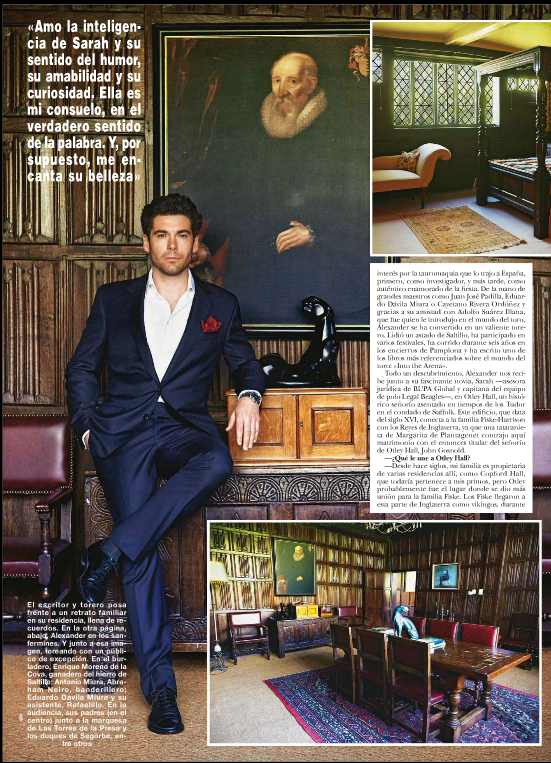
Alexander Fiske-Harrison with ancestor Lionel Gosnold behind him at the Gosnold family seat, Otley Hall in Suffolk for ¡Hola! magazine

Rev John FISKE, Rector of Thorpe Morieux, Suffolk 1754, received upon marriage ‘a fortune of £18,000’, born 1725, educated at Gonville and Caius College Cambridge (MA), married 10 August 1761 Sarah Thomas (died August 1762), daughter and heiress of Dr Samuel Thomas, of Lavenham, and died 10 April 1778 (buried at Thorpe Morieux), having had issue,

Arms, Crest and Motto of Harrison of Copford, Essex

Sarah Thomas FISKE, married at Copford 11 December 1783 John Haynes Harrison, (son of General Hezekiah Haynes, a Major General in the army of Oliver Cromwell, who was son of Governor John Haynes), of Copford Hall, Essex, Lord of the Manors of Copford and Felsham, Major in the Militia, and died 12 December 1825, having had with other issue.

Arms, Crest and Motto of Fiske of Thorpe Morieux, Suffolk

Major Fyske Goodeve FISKE-HARRISON, Lord of the Manor of Copford, Magistrate, Justice of the Peace, High Sheriff of Essex, Major in the Militia, born 1793; educated Charterhouse and St. John’s College Cambridge (MA); died 1872. (see Burke’s Landed Gentry of 1847 FISKE-HARRISON OF COPFORD HALL)
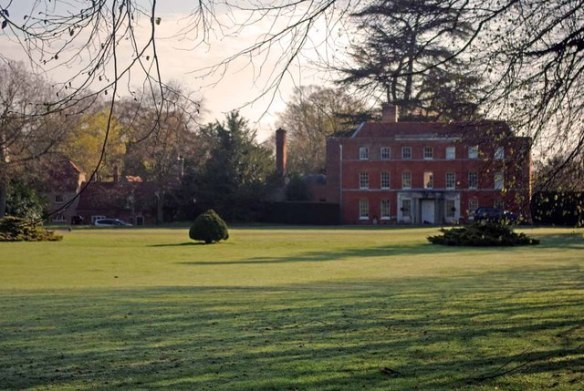
Copford Hall, Essex

Alexander Fiske-Harrison
“Fishers”
Layer-de-la-Haye
Essex
England

Post Scriptum, September 2025, ‘The Founding of Fishers’: I was recently made aware by a dear friend there is a Gatsbyesque retreat off the coast of Connecticut (although administratively in the state of New York) called Fishers Island, which intrigued me given the name of my family home, “Fishers”, in which I was born and raised.

My ancestor John Haynes arrived in the Massachusettes Bay Colony from Essex and became friends with its founder and first governor, John Winthrop, who had been a neighbour in East Anglia. After serving as fourth governor, following a falling out with Winthrop, Haynes went on to found the Connecticut Colony and become first governor there, alternating between that role and deputy governor for fourteen years until his death. While there, he became close friends with  Winthrop’s eldest son, John Winthrop the Younger, and Haynes was Governor of Connecticut when he signed the following grant:

John Winthrop the Younger obtained a grant of Fisher’s Island in 1640 from the Massachusetts Bay Colony, “reserving the right of Connecticut if it should be decided to be theirs.” He simultaneously applied to Connecticut for a similar grant in order that there might be no flaw in his title. The title was given to him by a General Court held at Hartford, Connecticut, April 9, 1641.

Winthrop the Younger later went on to govern Connecticut himself.

Haynes long friendship with Winthrop is recorded in various documents, from contemporary letters between them held by the Massachusettes Historial Society, to the minutes of the February 1908 meeting of the Massachusettes Colonial Society:

“Early in 1637 the General Court of Massachusetts Bay authorized the Council to treat with “or frends vpon Conectecot” in regard to matters of common defence against the Indians, and “to proceede wth them in the said treaty as occation shall require.”

Correspondence resulted in which, as noted by Governor Winthrop in his Journal under date of April 1, 1636 (doubtless a mistake for 1637), the representatives of Connecticut stated “their unpreparedness to declare themselves in the matter of government, in regard of their engagement to attend the answer of the gentlemen of Saybrook about the same matter.”

In May, 1637, John Haynes was in Saybrook on his way to his new home, and doubtless talked this question over with the younger Winthrop.”

The original “Fishers”, my family home, had already stood for a century at that point in time.

Interior of the present Fiske-Harrison family home, Fishers, in Layer-de-la-Haye, Essex, built in the late 1550s, during the reign of Queen Elizabeth I, daughter of King Henry VIII. Henry executed the Fiske-Harrisons’ ancestor -and Henry’s own first cousin – Margaret Pole, Countess of Salisbury. She was at the time the richest woman in England and the last person in history born with the surname Plantagenet. She was daughter of George Plantagenet, Duke of Clarence, of Shakespeare fame (“I’ll drown you in the malmsey butt within”) who was younger brother and heir to King Edward IV and elder brother and victim of King Richard III. Lady Margaret was also mother of Cardinal Reginald Pole, the last Roman Catholic Archbishop of Canterbury and was beatified in death by the Holy Catholic Church as a martyr.

THE ARMS OF FISKE-HARRISON OF LAYER-DE-LA-HAYE

Arms: Azure two pierced mullets or between to bars counter gobony erminois and argent all between in chief three estoiles and in base a single estoile argent.

Crest: Upon a helm with a wreath argent azure and gules passant through a triangle iron ensigned by a pierced mullet or a stork wings displayed and inverted argent mantled gules doubled argent.

Motto: Debemur Morti Nos Nostraque (Both ourselves and our creations are a debt owed to Death).
My latest press for Tortoise Media’s Slow Newscast: Lebedev, Lord of Siberia

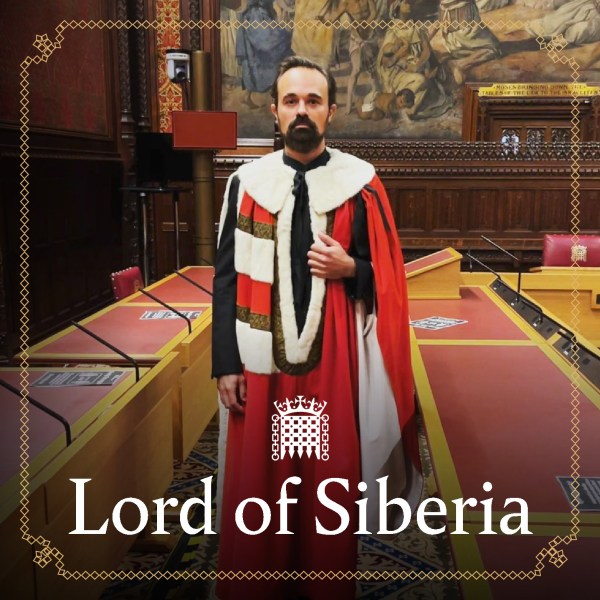
If you‘be been hearing about Evgeny, Lord Lebedev all over the news today – from the BBC to The Sunday Times – his KGB-turned-oligarch father, and his own socialite-turned-press baron career, ending as a Peer of the Realm, with the Prime Minister personally overturning MI6’s veto on that happening, then online here is the Slow Newscast that broke the story, republished on all channels today, from Tortoise, the new media venture from James Harding, former editor of The Times.
As the journalist says 26 minutes and 15 seconds into the podcast: “For the past three months, I have heard very different things about Evgeny. Some say he’s serious, others frivolous. Some say clever, others not so much. Stylish and vulgar; melancholy and a party boy. In many ways, Evgeny’s a cipher. The closest I’ve come to understanding him is by talking to this man: Alexander Fiske-Harrison.”
Alexander Fiske-Harrison

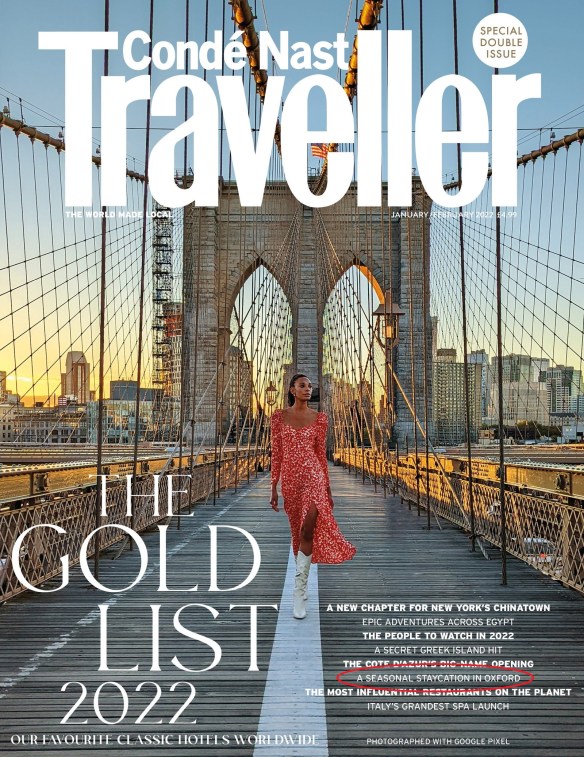
My latest article in Condé Nast Traveller: Oxford


Why Oxford should be your next staycation spot

Oxford puts the classics in classic. Yet recent additions are moving the story on. Alexander Fiske-Harrison retraces his university days and discovers new exciting hangouts

I have a fondness for smaller cities. Compared to the great metropolises, they are more discrete, more human in their scale. They are also often built upon a single resource. One thinks of Salzburg, with its salt mines, or Seville, which hosted all the gold of the Americas. Oxford is the most human of all, though, as it is built on the very commodity which puts the sapiens into Homo sapiens. Here, they mined wisdom.

I remember my own sense of awe when I arrived as an undergraduate in the mid-1990s – first as a biology student under one of Kenya’s greatest ecologists, and then studying philosophy under a tutor whose own tutor could trace a direct line, tutor to tutor, back to Immanuel Kant himself. I remember how, in the warm autumn sun, the university buildings stood like vast stone-clad thrones for the human mind – their distinctive golden colour coming from the ancient coral reefs that fossilised to form the limestone deposits of nearby Headington.

To read more click here…

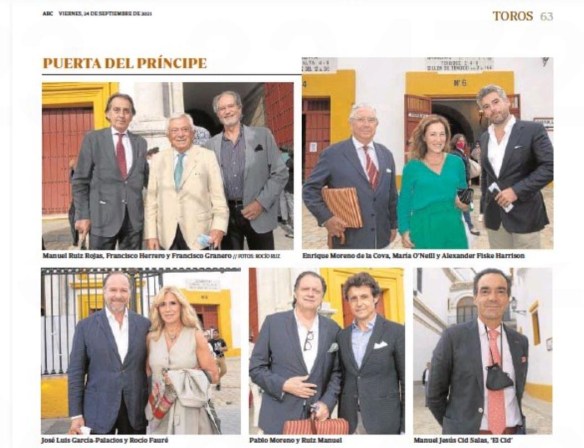
Me in ABC: Feria Has Returned To Seville

ABC de Sevilla, ABC of Seville, Puerta del Principe, Gate of the Prince, La Real Maestranza, The Royal Maestranza, Plaza de Toros, The Bull Ring, Feria, Feria de Abdul, April Fair, Feria de San Miguel, The Bullfight, La Corrida, Victorino Martín, Antonio Ferrera, El Cid, España, Spain, Matador, Torero, Bullfighter, Alexander Fiske-Harrison, Enrique Moreno de la Cova, Maria O’Neill, Maestrante

Seville